

Leather, machine parts and a laptop on a workbench

Insights

Perspectives from the shop floor

Short, practical points of view for owners and plant heads. Each one comes from work on real lines.

Handcrafted leather shoes on a factory workbench

Footwear

The six levers of a world-class footwear plant

Global brands are spreading their sourcing and rewarding suppliers who are fast, right first time and compliant. The plants that win pull six levers together.

  • Flow beats speed: most lead time is waiting between cutting, closing and lasting.
  • Defects found at final inspection were made upstream; gates must sit at the source.
  • Skills, chemistry, uptime and data decide whether gains hold after the consultants leave.

Executives reviewing a transformation roadmap with a consultant

Greenfield

Design the intelligence in before the concrete is poured

It is far cheaper to place sensors, data cabling and material flow on a drawing than to retrofit them into a running plant.

  • Lay out for flow first, then size the building around it.
  • Hire and train people while machines are still arriving.
  • Decide which data each machine will report before the purchase order goes out.
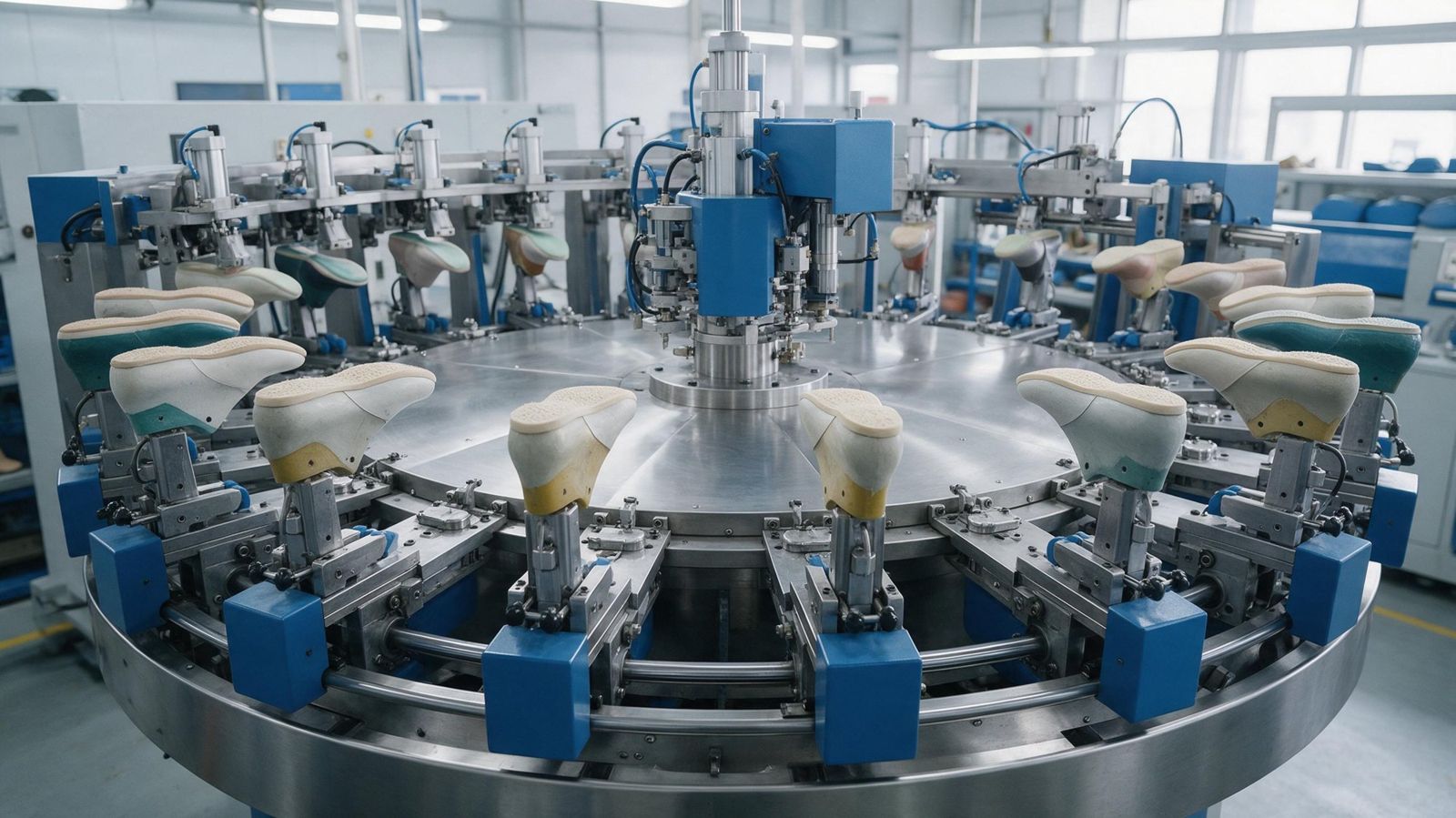
Rotary sole injection machine in a modern factory

AI & digital

From registers to real time: what AI actually changes on the floor

AI earns its place when it changes a decision on the shift, not when it adds another screen to the office.

  • Start with one question the plant asks every day, such as “will this order ship on time?”
  • Clean master data matters more than the model.
  • Every prediction needs an owner and a response written into standard work.
Factory roof covered with solar panels beside a water treatment plant

ESG

Energy is the one meter every practice reads

The same meter data that feeds an OEE model also feeds carbon accounting. Measure once and use it twice.

  • Map energy by line and machine before buying any equipment.
  • Scope 1 and 2 come straight from data the plant already has.
  • Buyers now ask for evidence, not estimates.
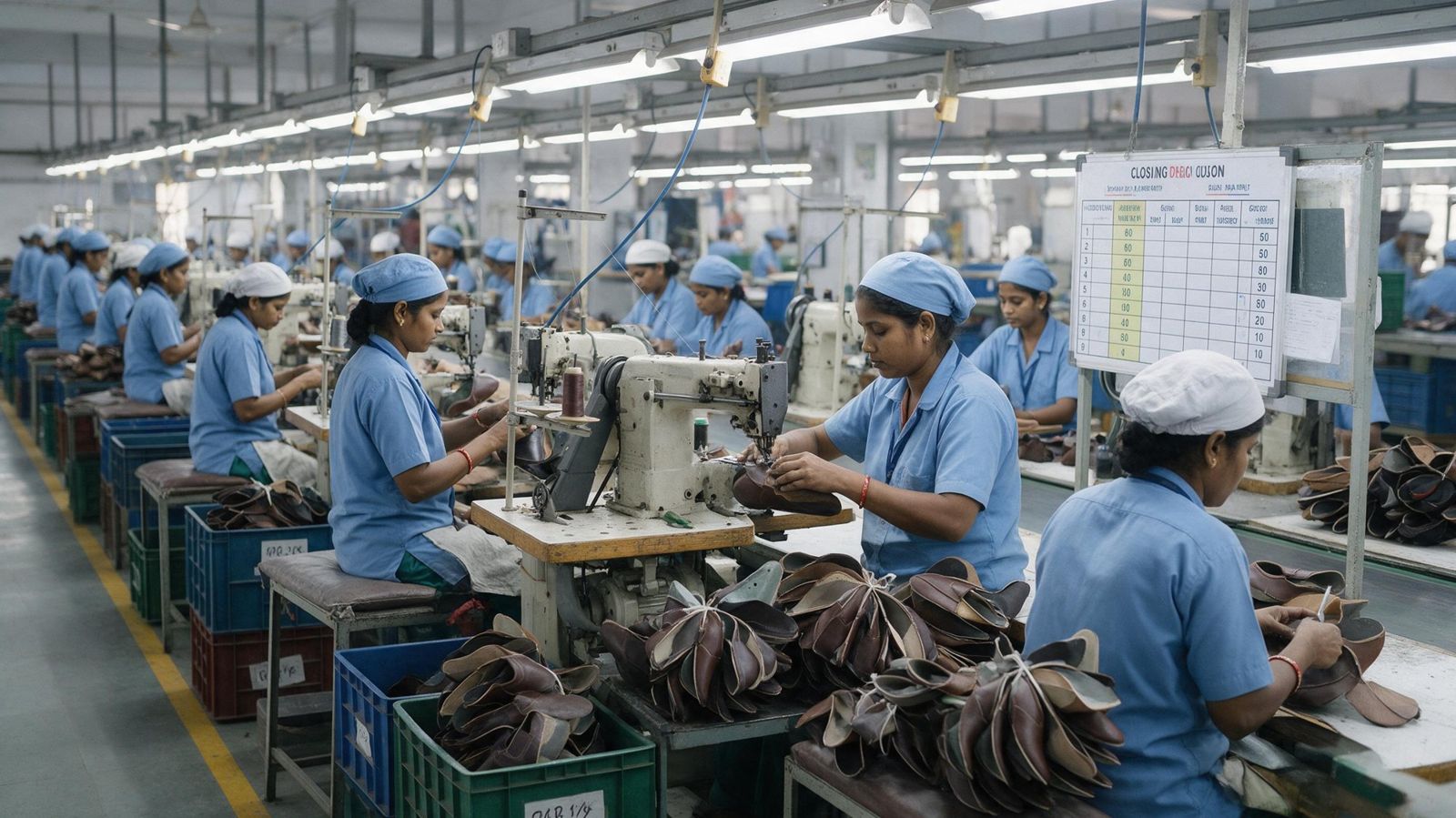
Women operators stitching shoe uppers on a closing line

People

What keeps a new operator beyond the first ninety days

Attrition is rarely about pay alone. It is about whether a new operator can see their own progress.

  • Teach every operation the same way, with a picture or video SOP.
  • Put the skills matrix on the line board where everyone can see it.
  • Link each skill level to a visible step in pay and a path to trainer.
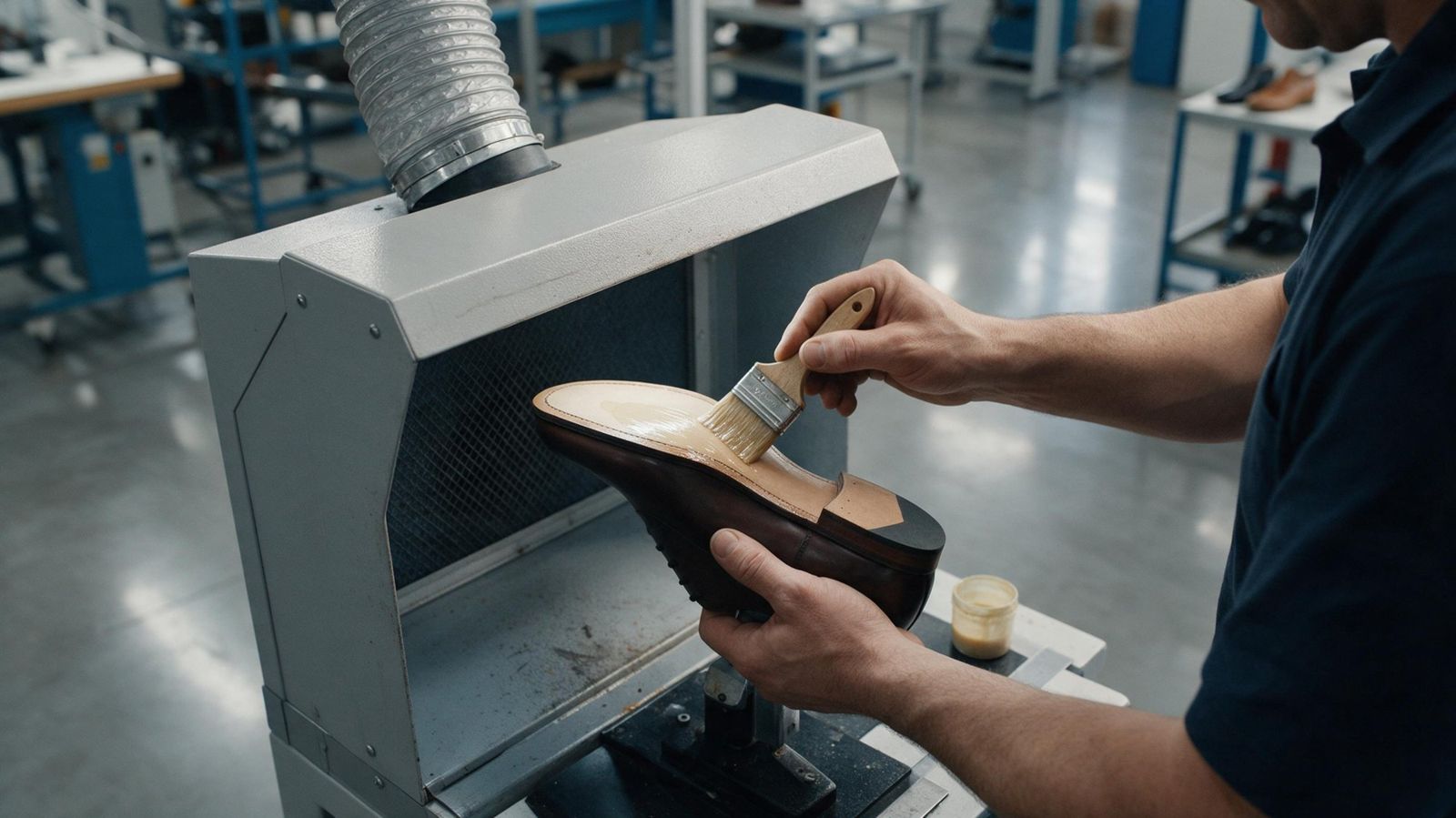
Worker applying adhesive to a lasted shoe under extraction

Quality & chemistry

Most sole failures start in the chemistry room

Sole separation and colour variation often look like workmanship problems but begin with a recipe or a process window.

  • Write a process window for every adhesive, primer and compound.
  • Check activation temperature and open time at the line, not only in the lab.
  • Keep RSL and chemical records audit-ready every day.

Tell us what the plant is doing that it should not be.

Start a conversation
WhatsApp us